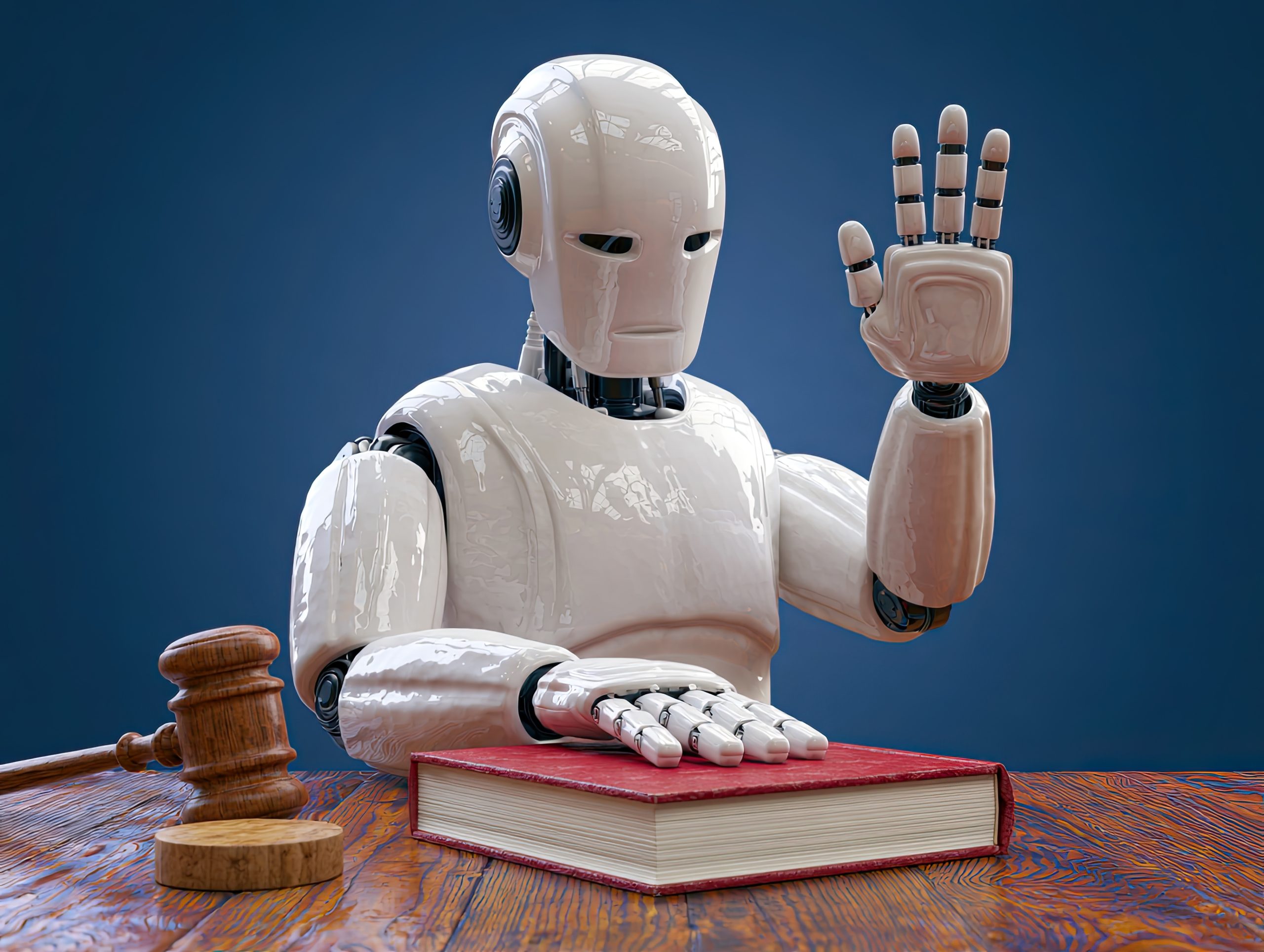
 For most of the history of automobile subrogation, determining who caused an accident has involved decidedly human questions. Who had the right-of-way? Who was speeding? Who ran the red light? Who failed to maintain a proper lookout? An automobile insurer pays its insured and then pursues the negligent third party responsible for the loss. Human failing and neglect is the target. That familiar model remains the foundation of automobile subrogation. But that is quickly changing. What happens when the “driver” that made the critical decision was not human?
“The future starts today, not tomorrow,” Pope John Paul II famously said. He was right. Driverless cars – more appropriately known as “autonomous vehicles” – are here. For most of us, driverless cars were something only seen in cartoons like “The Jetsons” — but that is no longer science fiction. Artificial intelligence algorithms and deep neural networks are now responsible for the operation of Tesla’s driver-assistance and autonomous driving features like Autopilot and Full Self-Driving (FSD). Ten years after our firm published one of the first articles delving into the transformation of automobile collision litigation in the dawning age of autonomous driving features, the technology has progressed light years. That article, authored by Gary Wickert and published ten years ago, can be found HERE.
Autonomous vehicles, automated driving systems (“ADS”), advanced driver-assistance systems (“ADAS”), artificial intelligence, cameras, radar, LiDAR, GPS mapping, and millions of lines of software are increasingly participating in decisions that were once made exclusively by human beings. When one of those decisions causes a collision, a seemingly routine automobile subrogation claim can suddenly become a sophisticated product liability case involving software engineers, component manufacturers, programmers, data, and algorithms.
The warning signs have been visible for years. In March 2018, an Uber test vehicle operating under the control of a developmental automated driving system struck and killed a pedestrian walking a bicycle across a roadway in Tempe, Arizona. The National Transportation Safety Board (NTSB) investigation revealed that the automated system detected the pedestrian but repeatedly changed its classification of what it was seeing before the collision. That investigation confirmed that Uber’s developmental ADS detected the pedestrian 5.6 seconds before impact but never accurately classified her as a pedestrian or predicted her path. The accident became an early illustration of a question that will increasingly confront claims and subrogation professionals: What happens when the vehicle sees something but does not correctly understand what it sees?
The question becomes even more interesting because autonomous vehicles will not eliminate accidents, even if the technology eventually becomes extraordinarily good. A 2024 peer-reviewed study published in Traffic Injury Prevention examined 112 accidents and modeled what would have happened if the vehicles had possessed near-perfect autonomous driving capabilities. Researchers still identified 15 accidents that were unavoidable. They divided them into “time-limit” accidents, where there simply was not enough time to avoid the collision, and “space-limit” accidents, where the physical environment provided insufficient room for avoidance. In the time-limit cases, the period between perception of the danger and collision was typically no more than 1.5 seconds.
That finding has enormous implications for subrogation. A collision involving an autonomous vehicle does not necessarily mean that the autonomous system malfunctioned. Sometimes physics wins. The subrogation investigation therefore must determine not merely what happened, but what the machine perceived, when it perceived it, how it classified the danger, what decision it made, what commands it issued, and whether any technologically feasible alternative could have avoided the loss.
Fortunately, the machine may leave behind a far more detailed witness than any human driver. The subrogation professional should immediately preserve and obtain the vehicle’s electronic evidence, including event data, camera footage, radar and LiDAR data, GPS and mapping information, system warnings, driver-monitoring data, and logs reflecting braking, steering, acceleration, and system disengagements. In a sophisticated ADS, these records may allow an expert to reconstruct the accident millisecond by millisecond: when a pedestrian or vehicle first entered sensor range, how the system classified the object, when it recognized a collision threat, what maneuver the software selected, and whether the vehicle actually executed the commanded braking or steering response. Software versions, calibration records, maintenance histories, and over-the-air updates may also reveal why the system behaved as it did. This makes an immediate and technically specific preservation letter critical. The modern subrogation investigation may depend less on asking a driver, “What did you see?” and more on asking the vehicle, “What did you see, and what did you do about it?”
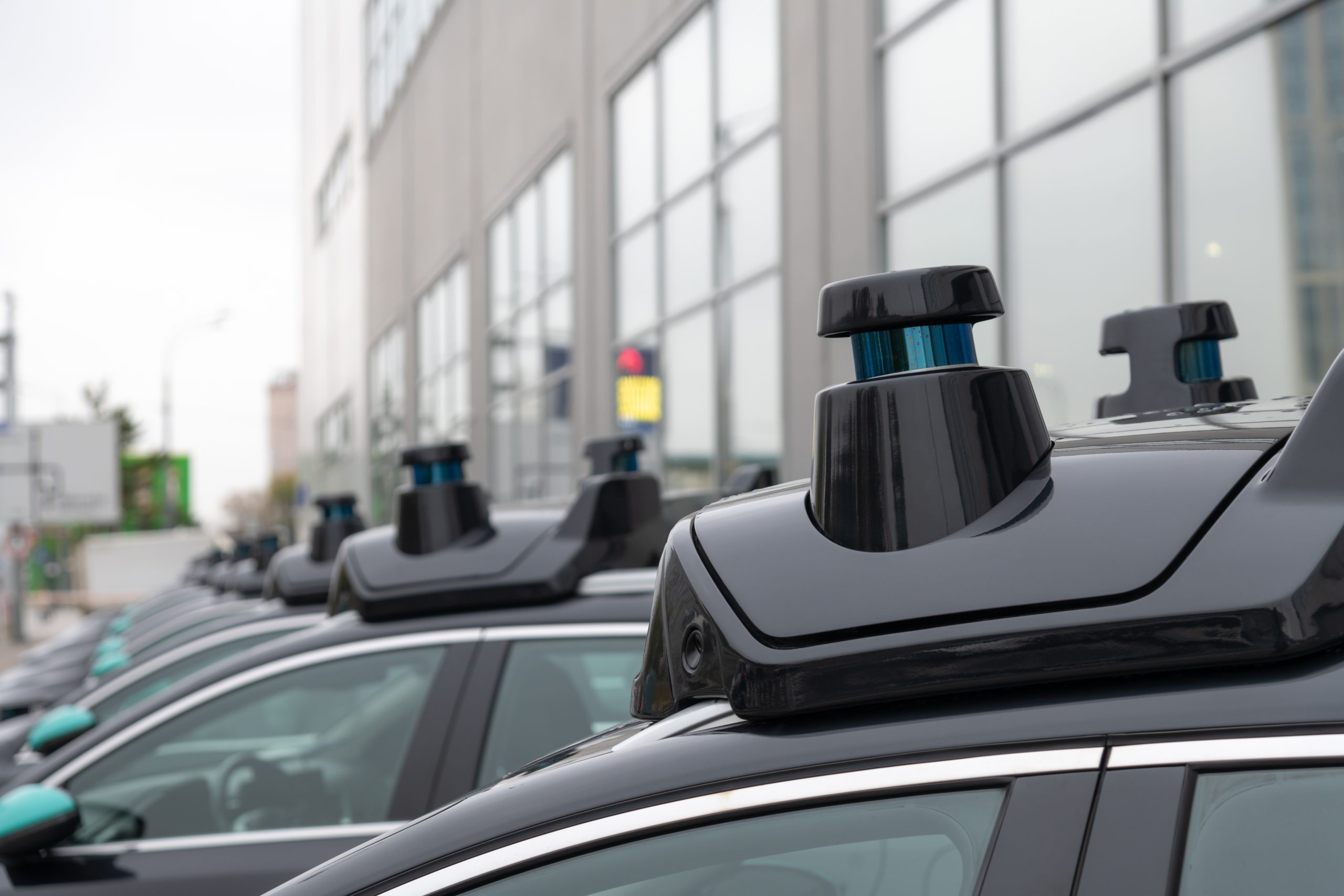 The Society of Automotive Engineers currently divides driving automation into Levels 0 through 5. At Levels 1 and 2, the human driver remains responsible for supervising the vehicle and intervening when necessary. At Level 3, automated driving occurs under defined conditions, but human intervention may be required following an alert or malfunction. At Levels 4 and 5, the human role diminishes dramatically, with Level 5 contemplating automated driving under all conditions in which a human could drive. As of September 2026, there are still no SAE Level 5 cars commercially available, and no deployed vehicle system qualifies as Level 5. NHTSA expressly states that Level 5 technology is not available on vehicles for consumer purchase. Level 5 means the automated system can drive under all conditions in which a human could drive, with no human driving required. That is the current SAE J3016 definition. Level 4 does exist in limited deployments. Robotaxis such as Waymo and Zoox can operate without a human driver, but only within defined operating conditions and geographic areas. NHTSA, for example, authorized commercial deployment of up to 2,500 Zoox robotaxis annually under a temporary exemption in July 2026. Today’s consumer Teslas and similar vehicles are still not Level 5, regardless of terminology such as “Full Self-Driving.” NHTSA says every vehicle currently offered for sale in the United States still requires driver attention. But Tesla has now launched its Cybercab robotaxi in Austin, Texas, aiming to directly challenge market leader Waymo.
For subrogation professionals, all of these distinctions matter because the identity of the potential defendant changes with them. At Level 2, did the driver ignore a warning or fail to supervise the system? At higher levels of automation, the investigation increasingly shifts toward the vehicle manufacturer, ADS developer, software programmer, sensor manufacturer, mapping provider, maintenance contractor, or some combination of them. The traditional negligence case does not disappear. It acquires several technologically sophisticated cousins.
This also changes what constitutes evidence. In yesterday’s automobile accident, the claims professional wanted photographs, witness statements, a police report, measurements, skid marks, and the vehicles. Tomorrow’s subrogation file may require all of those things plus software versions, event data, telemetry, camera footage, radar information, LiDAR point clouds, GPS and mapping data, driver-monitoring information, system warnings, disengagement records, braking and steering commands, over-the-air update histories, and the algorithmic decision logs showing what the vehicle believed was happening immediately before impact. The insurance industry is clearly not yet ready for subrogating serious accidents involving autonomous vehicles.
NHTSA’s current crash-reporting requirements illustrate just how important this digital evidence has become. Covered manufacturers and operators must report qualifying crashes involving ADS-equipped vehicles and Level 2 driver-assistance systems. The information collected can include the automation system involved, whether it was engaged, the vehicle’s pre-crash movement and speed, whether the vehicle was operating within its intended operational domain, and descriptions of system disengagements before the collision.
For subrogation professionals, the practical lesson is simple: preservation letters must evolve. Sending a letter demanding preservation of the vehicle may no longer be enough. Electronic information can be overwritten, remotely updated, deleted, or rendered meaningless when software changes. The vehicle must be treated like what it truly is—a computer on steroids. A serious autonomous-vehicle loss should trigger immediate demands directed toward the vehicle owner, fleet operator, manufacturer, ADS developer, and other appropriate entities requiring preservation of both physical, memory cards, and digital evidence. Waiting six months until after the claim is resolved and then hiring an accident reconstructionist may mean reconstructing a computer decision after the best evidence of that decision has disappeared. All of these are strong reasons to get subrogation counsel involved as soon as the accident happens—not after the evidence is gone.
There is another complication. The machine may have behaved exactly as programmed, yet the programming itself may be the problem. This becomes a defective design product liability case instead of a plain negligence action. Suppose an autonomous vehicle encounters a pedestrian, construction zone, emergency vehicle, unusual lane configuration, or object its software has difficulty classifying, as it did in the Tesla/pedestrian tragedy. The brakes work. The steering works. The cameras work. Nothing is “broken” in the conventional sense. Yet the algorithm makes the wrong decision. The resulting subrogation case may involve design defect, failure to warn, negligent programming, inadequate testing, defective sensor integration, erroneous mapping data, or foreseeable misuse by a human operator.
Our firm discussed many of these developing problems in 2017 when Gary Wickert appeared on the nationally broadcast Ringler Radio program “Driverless Cars Litigation.” At the time, autonomous vehicles seemed to many claims professionals like an interesting problem for the distant future. The discussion focused on how driverless technology would complicate liability, insurance, claims handling, and subrogation and require attorneys and claims professionals to understand the technology itself. That future has arrived.
And automobiles are merely the beginning. The same questions will arise when autonomous warehouse forklifts destroy inventory, robotic lawnmowers start fires, automated gates damage vehicles, agricultural robots injure workers, drones strike property, or AI-controlled industrial machinery makes a catastrophic decision. The recurring subrogation question will no longer always be, “Who was negligent?” Increasingly it will be, “Who designed, programmed, trained, maintained, updated, or controlled the machine that made the decision?” And because subrogated carriers have the burden of proof in any subrogation action, they will increasingly have to rely on expert testimony to meet their burden. And experts qualified to testify on these subjects right now are extremely hard to find and will no doubt be very expensive. They currently are all employed by the folks who build the autonomous vehicles. That alone could raise the bar in terms of the size of small collision auto subrogation cases that can be pursued economically.
Artificial intelligence will not eliminate subrogation. It will make it considerably more interesting, complicated, and initially…expensive. The successful subrogation professional of the future will still need to understand negligence, causation, product liability, comparative fault, and damages. But he or she will also need to understand sensors, software, telemetry, data preservation, automation levels, and algorithms. The tortfeasor of tomorrow may not have been texting, drinking, speeding, or even sitting behind the wheel.
Sometimes, the defendant will be an algorithm.