 California’s Economic Loss Doctrine (ELD) has long been a source of confusion for subrogation professionals. The challenge is not merely understanding the doctrine’s contours, but applying it to common residential fire losses where a discrete component product damages structures and contents far beyond its own failure point. Until recently, most of the major California decisions addressing the “other property” exception did not arise in the subrogation context, leaving open the question of how these principles apply when an insurer stands in the shoes of its insured. The recent federal decision in State Farm General Insurance Co. v. General Electric Co., addresses that uncertainty directly and provides useful guidance for property subrogation claims involving consumer appliances that come with a home. It is a case worth studying because the fact pattern is one of the most common and confusing in the subrogation world.
The ELD bars tort claims when the plaintiff seeks only economic damages arising from the product’s failure to perform as intended, absent personal injury or damage to “other property.” The rationale is that disappointed product expectations are matters for contract law, not tort law. In the traditional formulation, when a product injures only itself, the buyer’s remedy is warranty; when it injures “other property,” tort remedies remain available. To be sure, the ELD is the bane of a subrogation professional’s existence—especially in cases such as car fires and other products that burn themselves up.
California adopted this tort/contract law distinction in 2000.[1] There, the California Supreme Court reaffirmed that tort recovery for purely economic loss is barred unless a defective product causes personal injury or damage to “other property.” California refined the doctrine’s application to construction components in a pair of central decisions. In Jimenez v. Superior Court, the court held that windows installed in mass-produced homes were separate products capable of damaging other portions of the home, allowing tort recovery for that separate “other property” damage.[2] A year later, in KB Home v. Superior Court, the court explained that the operative inquiry is whether the component is an “integral part of the product as a whole,” such that its failure inevitably damages the larger product.[3] If the component serves an independent function and is not essential to the integrated operation of the larger finished product, damage to the surrounding structure constitutes damage to “other property.”
These decisions created an intermediate rule: California allows tort recovery only for harm to property distinct from the defective product itself, but defines “product” and “other property” pragmatically, with an eye toward real-world function. Still, the ELD remains difficult to apply because courts have not always been consistent in defining what constitutes the “product” for purposes of the analysis. In residential fire cases, subrogation professionals often ask whether a household appliance is considered part of the home—thus barring tort recovery for fire damage to the structure—or whether it retains its identity as a separate product.
State Farm v. GE presented that question directly. The insured purchased a Studio City home that came equipped with a GE wine and beverage cooler. The cooler was not separately purchased by the insured, but was included in the sale of the home by a prior owner. When the cooler allegedly malfunctioned and caused a fire, the property suffered more than $10.8 million in damage to the dwelling and contents. State Farm paid the loss and sued GE in negligence and strict products liability. GE moved to dismiss, arguing that the ELD barred the tort claims because the fire caused only “economic loss” to the home, which GE characterized as an integrated whole comprising the cooler and the house.
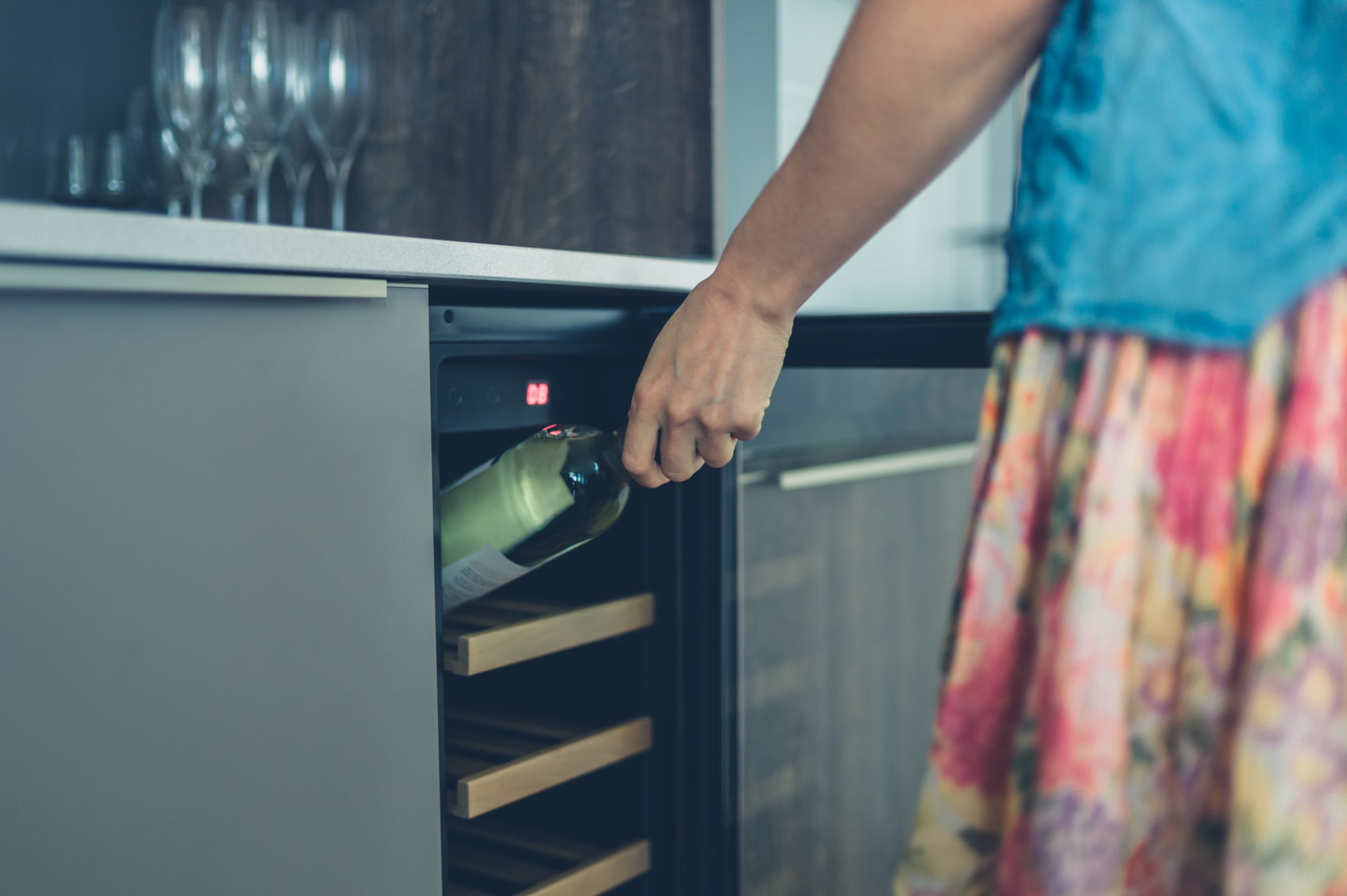 The court rejected that argument. Applying Jimenez and KB Home, the court held that the cooler was indeed a separate product for purposes of the ELD. A standalone beverage cooler is not an integral component of a home, is not necessary to its operation, and is placed into the stream of commerce as a discrete consumer appliance. The fact that the homeowner acquired the cooler and the house in a single real estate transaction did not transform the cooler into part of an integrated product. The fire damage to the structure and contents, therefore, constituted damage to “other property,” and the ELD did not bar State Farm’s tort claims.
This holding has significant implications for subrogation professionals.
First, it confirms that subrogated insurers possess the same tort rights as their insureds for purposes of the ELD. GE argued that the ELD should apply differently in subrogation, but the court rejected that position. Subrogation places the insurer in the shoes of the insured; it does not alter or diminish the substantive rights available to the insured at the time of the loss.
Second, the case speaks directly to a common fact pattern in property subrogation: a consumer appliance that comes with a residence causes a fire. Subrogation professionals frequently struggle with determining what constitutes the relevant “product.” State Farm is one of the first clear decisions in a true subrogation setting that applies California’s intermediate ELD rule to this type of scenario. It clarifies that appliances such as wine coolers, refrigerators, and dishwashers remain discrete products unless they are functionally inseparable from the home itself.
Third, the decision helps clarify a recurring source of confusion. Many believe the “other property” exception allows recovery for the product itself once “other property” damage exists. Some states do follow this rule. Alaska is an example.[4] California does not follow that rule, however. In California, damage to the defective product itself remains barred by the ELD; the exception permits tort recovery only for the distinct “other property.” Although the State Farm court did not need to reach this precise issue because the claim focused on the large structural and contents damage, the decision aligns with and reinforces that principle.
Finally, the decision pushes back against a common argument by defendants that anything located within a home becomes part of a single “integrated product.” California courts have consistently rejected that oversimplification, and State Farm continues that trend. A home is not a single monolithic product; it is a structure containing independent items that can create separate tort liability when they fail.
State Farm v. GE offers welcome clarity for subrogation professionals navigating California’s ELD. It confirms that consumer appliances remain independent products, that subrogated insurers enjoy the full benefit of the “other property” exception, and that residential fire losses involving discrete household products are recoverable in tort. For an area of law often criticized for conceptual inconsistency, the decision provides practical guidance that will meaningfully assist those pursuing California subrogation claims.
Katherine Sandoval oversees MWL’s California branch office. For questions about the ELD and subrogation, contact Katie at ksandoval@mwl-law.com.
[1] Aas v. Superior Court, 24 Cal.4th 627 (2000).
[2] Jimenez v. Superior Court, 29 Cal.4th 473 (2002).
[3] KB Home v. Superior Court, 112 Cal. App.4th 1076 (2003).
[4] Northern Power & Eng’g Corp. v. Caterpillar Tractor Co., 623 P.2d 324 (Alaska 1981).