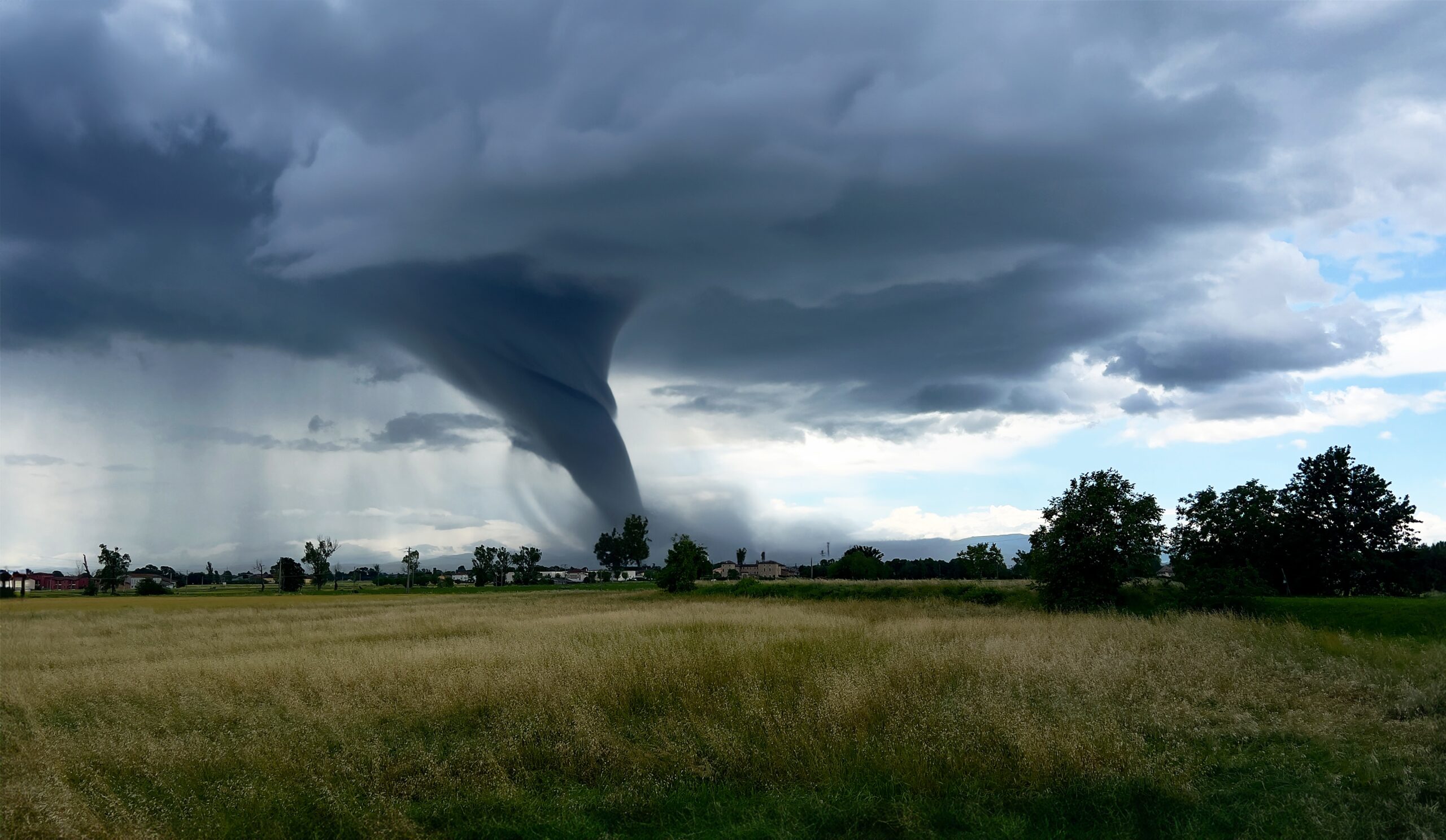
 As a historic and deadly wave of severe weather events continues to batter the U.S. Midwest, the insurance and reinsurance industries are bracing for more than $5 billion in losses, making this one of the most significant natural disaster events of 2025. Tornadoes, torrential rains, flooding, and destructive winds have brought widespread destruction to communities and industries alike. For the insurance industry, the instinct may be to treat these events as unavoidable and unassignable—the textbook definition of an “Act of God.” But that assumption could be a costly mistake.
At Matthiesen, Wickert & Lehrer, S.C. (MWL), we know that catastrophe does not eliminate the potential for third-party liability—it often conceals it. In fact, our most successful flood and storm-related recoveries have come from claims that were initially closed as having “no subrogation.” As with many losses arising from natural disasters, the difference between writing off a multimillion-dollar payout and recovering significant sums lies in the willingness to investigate, the creativity to pursue recovery theories, and the science to prove them.
God Sends the Rain, But Man Channels the Water
It’s a common misconception that the term “Act of God” is a legal shield protecting all from liability in a natural disaster. In reality, this is only true when human conduct has played no part in the resulting damage. As courts have repeatedly affirmed, human negligence or misconduct can transform a natural disaster into a man-made catastrophe, making it actionable in tort.
Cases handled by MWL illustrate this point with emphasis. After floodwaters engulfed more than 1,369 new Subaru vehicles stored on a floodplain in Kenosha, Wisconsin, the loss was initially written off as un-subrogatable. But MWL’s subsequent investigation, which included hydrological modeling and historic floodplain analysis, revealed that the vehicles were parked on a known 100-year floodplain in violation of lease agreements and prudent storage practices. Our efforts ultimately recovered over $7 million for our client.
Similarly, in the California Flood of 1998, more than 2,210 vehicles were submerged on a Bay Area storage lot. MWL was able to show that the local drainage system had not been maintained to the necessary capacity and that urbanization had increased runoff beyond the system’s design. The result? A $2.5 million recovery against the County and other governmental entities.
These examples underscore a critical truth: while nature may trigger the event, man often exacerbates the damage. And therein lies the recovery potential.
Identifying Liability in Natural Disaster Claims
When it comes to catastrophic weather events—floods, hurricanes, wildfires, and tornadoes—the key to unlocking recovery lies in understanding the intersection of meteorology, engineering, and law. MWL routinely works with forensic hydrologists, engineers, and GIS specialists to identify the man-made conditions that either intensified the loss or failed to mitigate it. These include:
- Improper grading or land development in known floodplains.
- Failure to maintain culverts, drainage channels, or detention basins.
- Negligent placement of storage structures in high-risk zones.
- Urban development that increases impervious surface runoff.
- Defective infrastructure, such as levees, flap gates, or retaining walls.
In many cases, government entities—counties, municipalities, and flood control districts—are involved. Although sovereign immunity can present challenges, recovery may still be viable through causes of action such as inverse condemnation or dangerous condition of public property, especially when the government fails to meet its own published infrastructure design standards.
Science Is the Subrogation Professional’s Best Ally
Natural disasters are often wrongly assumed to be unquantifiable or unpredictable. But water behaves according to the laws of physics, gravity, and topography. With today’s sophisticated modeling tools—such as HEC-HMS, HEC-RAS, and TR-55—it is possible to reconstruct water movement with precision. MWL frequently employs these models in tandem with high-water marks, photographic evidence, and eyewitness testimony to develop persuasive liability theories.
Consider the difference six inches of floodwater can make: one level may lead to minor repairable damage, while a slightly higher level totals a fleet of vehicles. By using forensic modeling, MWL has been able to show that if not for a clogged storm drain, misaligned culvert, or negligently designed slope, that extra six inches wouldn’t have occurred.
Subrogation After the Storm: What Should You Do Now?
If your company has recently paid a substantial loss due to the 2025 Midwest storms—or any other natural disaster—it’s critical to take the following steps:
- Preserve the Scene: Secure evidence immediately. Watermarks, debris lines, and structural failure points vanish quickly.
- Engage Subrogation Counsel Early: Early expert retention and legal guidance are key to directing investigations and preserving liability claims.
- Obtain Meteorological and Hydrological Data: Rainfall totals, watershed maps, and FEMA flood maps are invaluable in establishing the foreseeability of the event.
- Survey the Human Landscape: Ask what man-made features or decisions could have redirected, concentrated, or failed to control the damaging force.
MWL routinely consults at no charge on large-loss storm claims to assess the viability of subrogation. Even if your file is marked “Act of God” or “no subro,” we invite you to let us take a second look. More often than not, the trail leads to a human cause of action hiding beneath the surface.
Flood, Wind, or Fire—There Is Always a Cause to Consider
While this article focuses on flood and storm damage, the principles apply equally to losses caused by hurricanes, wildfires, and even tornadoes. In the aftermath of Hurricane Katrina, MWL consulted with federal agencies on multiple recovery cases. In Kentucky, we recently investigated flooding linked to strip-mining runoff that overwhelmed drainage systems, resulting in downstream property destruction.In each case, we’ve found that natural disasters magnify existing vulnerabilities created by man—and with the right investment in science and legal analysis, those vulnerabilities often translate into successful recovery.
Conclusion
Natural disasters may be an unavoidable part of life—but massive uninsured losses don’t have to be. When catastrophe strikes, subrogation isn’t just possible—it’s often imperative. While God may send the storm, what happens afterward is almost always influenced by man. It is in that space between chaos and control that subrogation opportunity thrives.
If your organization has suffered significant property losses during the recent Midwest weather outbreaks or any other catastrophic event, contact Matthiesen, Wickert & Lehrer, S.C. to discuss your subrogation options. Our combination of litigation experience, technical expertise, and dogged determination makes us uniquely equipped to recover even the most improbable claims. For questions or consultations, contact Ashton Kirsch at akirsch@mwl-law.com.